
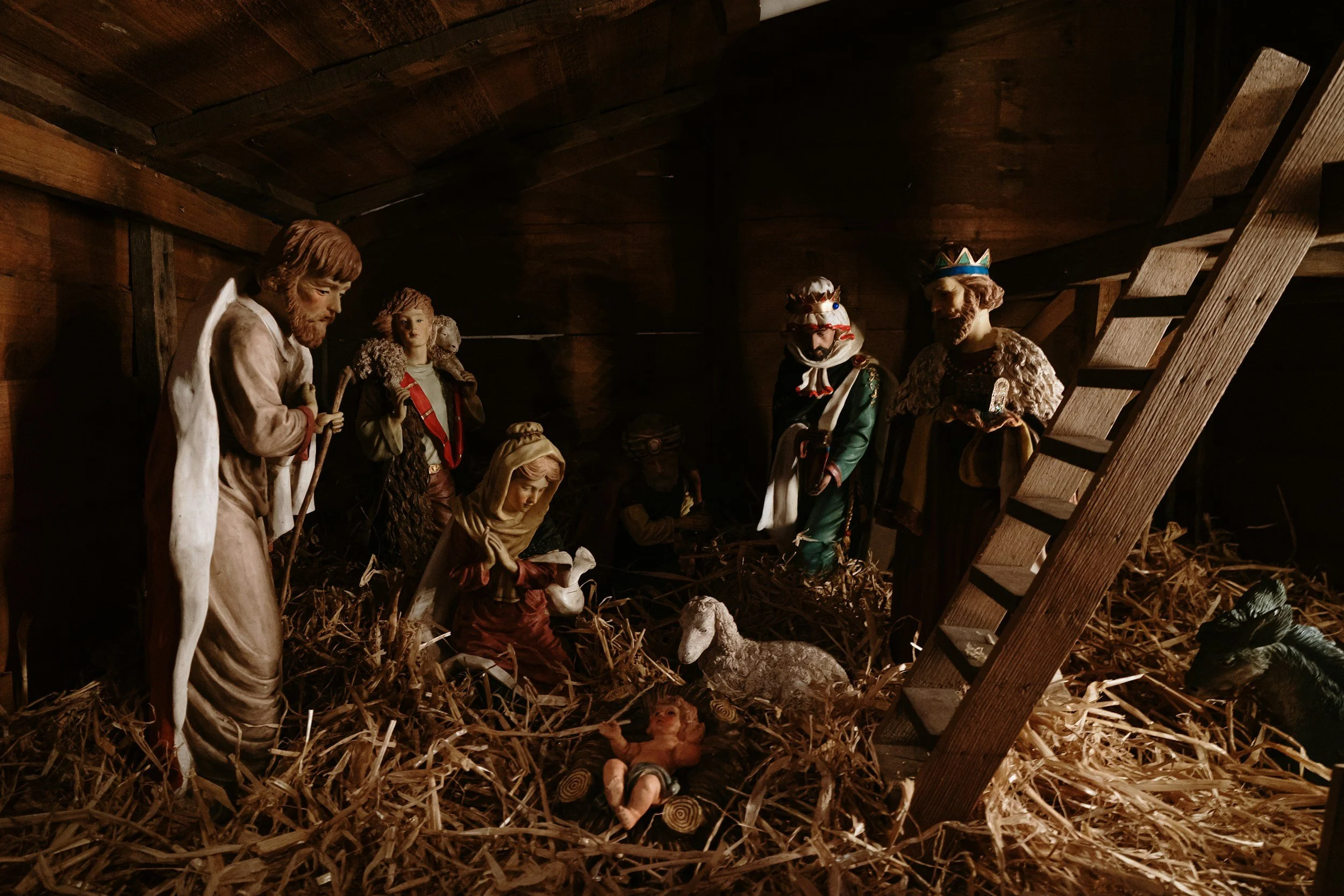
- By Gabriel Voorhees
The Anguish and Redemption of Joseph: A Dissertation on the Complexity of His Decision
The story of Joseph and Mary is often read with the calm inevitability of hindsight, as though those caught within its unfolding were somehow insulated from the emotional weight of its contradictions. Yet when we step into the historical, cultural, and relational fabric of first-century Jewish life, we discover a drama that is thick with tension, uncertainty, and the painful beauty of obedience. Nowhere is this more evident than in Joseph’s experience. His path from betrayal to bewilderment, from contemplation of divorce to acceptance of divine purpose, reveals a man navigating the collision between righteousness, compassion, law, family honor, and supernatural mystery.
Joseph and Mary were betrothed—a legally binding covenant that, in their world, carried the weight of marriage without its physical consummation. Betrothal (erusin) involved vows, contracts, witnesses, and a public recognition that the two belonged to one another. Breaking it required formal divorce. For Joseph, a righteous man (Matthew 1:19), the covenant was sacred.
Into the serenity of this expectation came a shattering revelation: Mary was pregnant. Joseph knew with certainty he was not the father. The simplicity of the fact concealed a storm of implications.
The Torah made no allowance for a pregnancy within betrothal outside of the groom. Such a situation implied one of two things, both devastating:
1. Mary had willingly been unfaithful, a moral and covenantal betrayal.
2. Mary had been violated, an event that carried deep grief, shame, and social fallout.
Both scenarios struck Joseph with emotional disorientation. He would have felt confusion, grief, betrayal, and fear—not just for himself but for Mary and their families. The future he had been building—literally, as the groom’s task—suddenly lay in ruins.
The Gospel is quiet about the timeline, but silence is often where human suffering hides.
Between Mary’s disclosure and the angel’s visitation to Joseph, there were likely days—perhaps weeks—of turmoil. These days matter. They reveal Joseph’s heart and the magnitude of what God was asking of him.
Mary’s Experience
Mary had already encountered Gabriel. She already understood the divine plan. She had said with stunning faith:
“Be it unto me according to Your word.” (Luke 1:38)
She bore a secret glory Joseph did not yet share. She walked in purpose while he walked in pain. Imagine the difficulty of every conversation between them—Mary holding onto a breathtaking revelation Joseph did not know, Joseph trying to reconcile the Mary he knew with the situation before him.
Joseph’s Experience
For Joseph, the days must have felt suffocating. He was a man known for righteousness—meaning devotion to the Law of Moses. The Law demanded action. Joseph could not simply ignore the situation without becoming complicit in lawlessness.
And yet he was also a man of compassion. He loved Mary. The Scripture says he did not want to “expose her to public disgrace.” (Matthew 1:19)
His plan to divorce her quietly was a noble attempt at righteousness tempered by mercy.
But this “quiet divorce” was not emotionally quiet. It involved internal war:
• The betrayal he believed occurred
• The love he still held
• The duty he bore as a son of David
• The shame the community might inflict
• The future he must now abandon
• The fear of dishonoring God
• The longing for clarity God had not yet given
Joseph inhabited a liminal space between law and love, righteousness and mercy, justice and compassion. This unresolved tension formed the crucible in which God would soon speak.
When Joseph “had considered these things” (Matthew 1:20)—that is, after wrestling, grieving, and finally deciding—a heavenly interruption shattered the silence.
In a dream, Gabriel brought Joseph into the divine plan Mary had already entered:
“Joseph, son of David, do not be afraid to take Mary as your wife,
for what is conceived in her is from the Holy Spirit.”
This announcement did more than explain the pregnancy. It redefined Joseph’s role:
• Joseph must take Mary as his wife.
• Joseph must protect her from shame.
• Joseph must name the child.
• Joseph must grant Jesus his Davidic lineage.
• Joseph must become guardian of a mystery he did not conceive.
The relief Joseph must have felt is unimaginable.
The woman he loved had not betrayed him.
The covenant he held dear had not collapsed.
And more—he was invited to father the Messiah.
This moment is the turning point where Joseph’s righteousness becomes obedience, and his obedience becomes worship.
Even after the angel’s reassurance, Joseph’s obedience did not remove the public stigma. The timeline of Mary’s pregnancy would still raise questions. The community would not believe in angelic explanations.
Joseph chose obedience in the face of misunderstanding.
He bore:
• Suspicion
• Whispered gossip
• Community shame
• The cost of trusting God over reputation
His “yes” was quiet, but world-changing.
When Joseph and Mary arrived in Bethlehem, the circumstances looked anything but divine:
no guest room, no family lodging, no honor, no celebration.
Externally, their situation was humble—even humiliating.
But internally?
The birth was the dawn of redemption.
This moment transformed everything Joseph had endured:
• The agony of misunderstanding
• The weight of law and compassion
• The emotional storm of Mary’s pregnancy
• The fear of scandal
• The uncertainty of the future
All these were swallowed up when Joseph held the child he had been commanded to name: Jesus—Yeshua—“The Lord saves.”
As Joseph looked on the newborn face of the Messiah, the struggle of months found its meaning. The angel’s words had taken shape in flesh. His obedience had become part of the incarnation story. What had begun in confusion ended in revelation.
And the internal relief was unspeakable:
• The promise was real.
• The plan was divine.
• The struggle had purpose.
• The cost had beauty.
• The Messiah had come.
The external world saw a poor couple with a newborn child.
But internally, Joseph and Mary stood in the center of God’s cosmic redemption.
Joseph’s journey is one of the most emotionally complex and faith-filled narratives in Scripture. He moved from anguish to clarity, from perceived betrayal to divine calling, from social shame to spiritual honor. The days of silence mattered, because they were the proving ground of his heart. His obedience shaped the upbringing of the Savior. His faith allowed the Messiah to be born under protection and legitimacy. And his relief at the birth of Jesus was the culmination of a path that few men would have had the courage to walk.
In Joseph, we see a man whose quiet righteousness partnered with the purposes of God, whose willingness to embrace what he did not understand carried the hope of the world. His story reminds us that obedience is often born through confusion, that divine plans often disrupt human expectations, and that God’s greatest works frequently come wrapped in circumstances that do not fit our categories.