- by Gabriel Voorhees
The Fourth Man in the Fire: Image, Sound, and the War for Worship
Daniel 3 opens with a world saturated in image and sound.
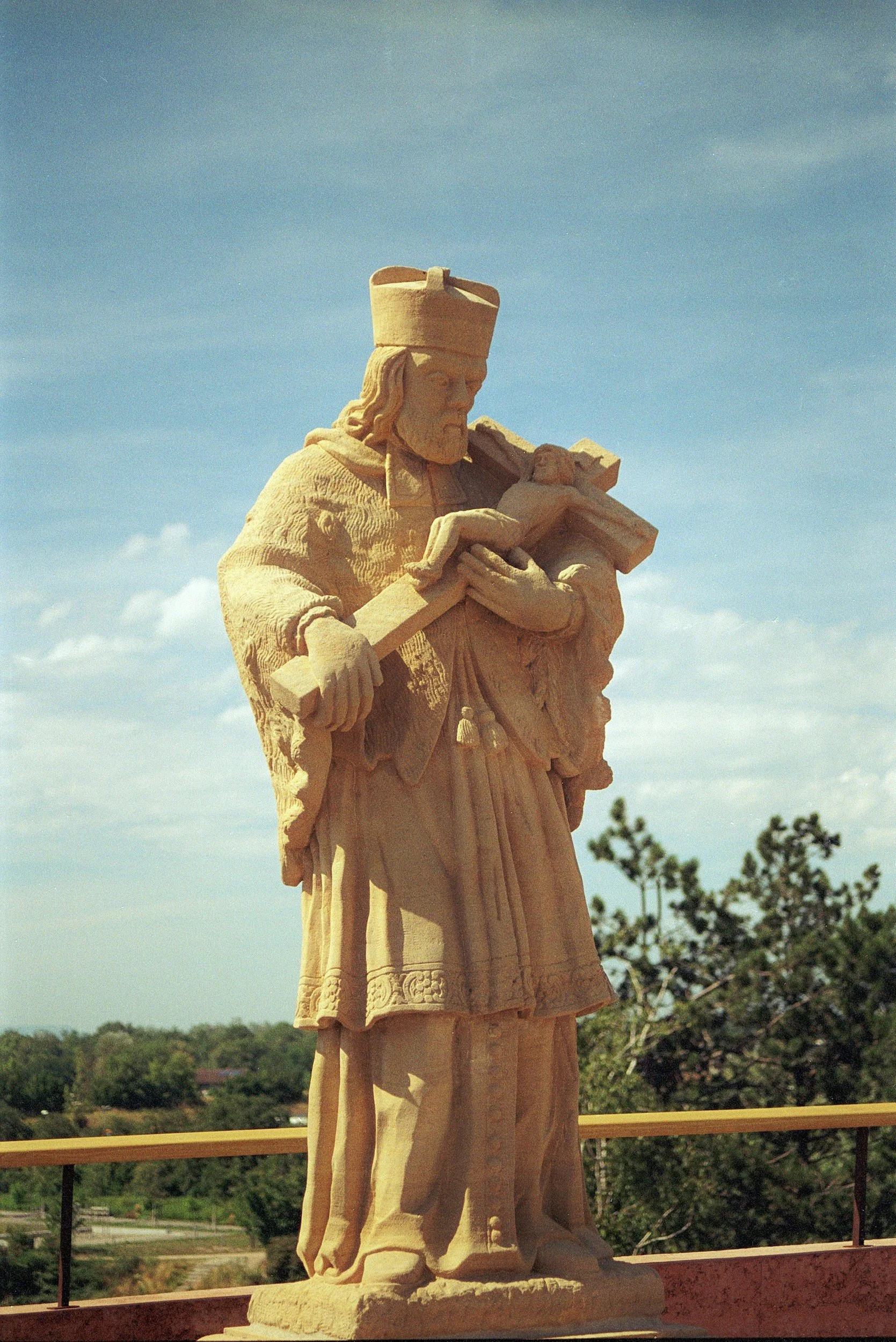
Nebuchadnezzar erects a colossal golden image—cold, lifeless, man-made—and then surrounds it with music. The text is almost excessive in repetition: horn, pipe, lyre, trigon, harp, bagpipe, and “all kinds of music.” Why the redundancy? Because Scripture is showing us something deliberate: worship is being engineered.
The image tells them what to worship.
The sound tells them when to worship.
The command tells them how to worship.
This is not devotion—it is domination.
“There is nothing new under the sun.” What we see in Babylon is not ancient history; it is a pattern. Today, images and sounds have multiplied across screens, speakers, platforms, and stages. They follow us, interrupt us, surround us, and demand our attention. These images promise identity. These sounds promise belonging. Together, they quietly ask for what only God deserves: our worship, our affection, our fear, our love.
This is striking, because humanity was created as the opposite of Babylon’s system. We were made in the image of God, and we were made to make a sound—the sound of praise. Scripture declares that we ourselves are now the temple of the Holy Spirit. Worship was never meant to be coerced from the outside; it was meant to rise freely from the inside.
So the enemy’s strategy has always been the same:
If he cannot destroy God, he will distort worship.
If he cannot silence praise, he will replace it.
Worship Enforced by Fear
In Daniel 3, three young Israelites stand among the leaders of a pagan empire. They are foreign slaves educated in the king’s leadership school, renamed after Babylonian gods, pressured to eat Babylonian food, and trained to serve Babylonian power. Yet from the beginning, they quietly refuse assimilation. God honors that refusal with wisdom, health, and favor.
Then comes the real test.
The law declares: When the music plays, bow.
If you do not conform—you will die.
This is how false worship always works. It is enforced by fear. Fear of death. Fear of exclusion. Fear of losing status, comfort, livelihood, or approval. Scripture tells us plainly: the fear of man is a snare. And fear, at its core, is misplaced worship. Whatever we fear most is what we obey.
That is why “the fear of the Lord” is the beginning of wisdom (Proverbs 9:10), and why it appears among the sevenfold manifestations of the Spirit in Isaiah 11. Holy fear does not paralyze—it aligns. It frees us from every lesser fear.
Taking Fear Off the Board
When the king confronts Shadrach, Meshach, and Abednego, their response is astonishing in its clarity and courage:
“Our God is able to deliver us… but even if He does not, we will not bow.”
This is not bravado. This is wisdom.
They remove fear from the equation entirely. Their obedience is no longer outcome-based. Their worship is no longer conditional. Life or death no longer determines their faithfulness.
This is the moment where heaven gains legal access to earth.
Perfect love casts out fear (1 John 4:18), because fear involves punishment. Often we think only of God’s love toward us—and rightly so. But here we see something more: their love toward God is so complete that the threat of punishment loses its power. Perfect love is love that is not just received, it is love that is reciprocated. They knew God loved them, and their act of loving Him back was to withstand this demand of idol worship. The cost of not loving Him becomes greater than the cost of dying.
This is why the king’s face becomes “distorted with rage.” This is not merely political anger; it is spiritual offense. Control has lost its leverage. Fear has failed. And when fear fails, the enemy throws a tantrum.
Seven Times Hotter
Nebuchadnezzar orders the furnace heated “seven times hotter than usual.”
This is not poetic exaggeration. Babylon was a culture of metallurgy—they had just smelted enough gold to create a ninety-foot statue. They knew heat. And the number seven is never accidental in Scripture. It speaks of fullness, completion, divine measure.
What the king intends as ultimate destruction becomes divine encounter.
The fire is so intense that the soldiers who bind the men are killed. The very instruments of oppression are consumed. Yet the ones who were bound are suddenly free—walking, unrestrained, untouched.
And then comes the question that echoes through history:
“Did we not cast three men bound into the fire? … I see four men, loosed and walking in the midst of the fire—and the fourth looks like a son of the gods.”
The Revelation in the Fire
Here is the great revelation:
Jesus does not always keep us from the fire—but He always joins us in it.
And not only do the faithful see Him—even their enemies do.
There is revelation in the fire.
There is purification in the fire.
There is freedom in the fire.
There is reformation in the fire.
What went into the fire bound came out free. What threatened to destroy them became the place where God revealed Himself most clearly.
And notice this: the men do not leave the fire on their own. They come out only when the very king who demanded their worship calls them out. The fire exposes the emptiness of false gods and silences the voice of forced worship.
What Cannot Enter the Fire
One thing cannot survive this fire: fear.
Fear would have kept them bowing.
Fear would have kept heaven at a distance.
Fear would have kept the fourth Man unseen.
But love drove fear out—and love made room for glory.
In a world filled with images and sounds clamoring for our devotion, the question remains the same: When the music plays, will we bow?
May we be a people who take fear off the board.
May we worship in spirit and in truth.
And may we discover, again and again, that there is always a fourth Man in the fire.